

03 Sep Comparing Lengthening Nail Systems (Precice vs. PMax vs. Fitbone)
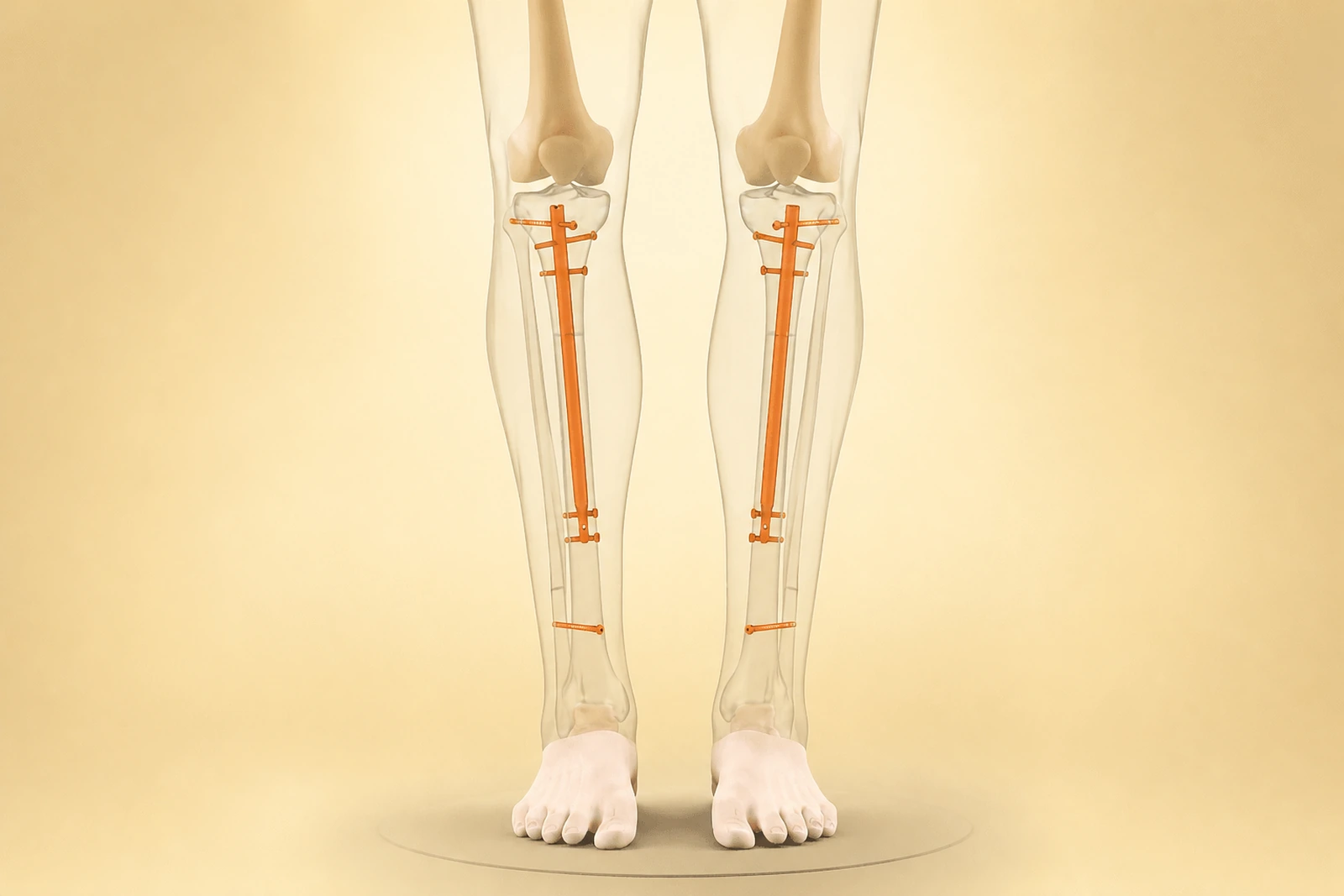
Over the past two decades, limb lengthening has moved away from bulky external frames and toward internal telescoping nails that lengthen bone from the inside, with far less visible hardware and generally more comfortable recovery. Several device systems now exist in this space, each representing a different design approach to the same underlying goal: controlled, gradual, motor- or magnet-driven bone distraction.
Magnetically driven nails (the Precice nail) work using an internal magnet connected to a mechanical gearbox inside the nail. An external remote control device, held against the leg, spins the internal magnet, which drives a precision screw mechanism that lengthens the nail by a fraction of a millimeter with each activation. Patients typically perform these lengthening sessions at home several times a day, guided by their surgical team. Earlier-generation magnetic nails established the basic technology and safety profile of this approach. Newer-generation designs (PMax) have generally focused on improvements like increased nail diameter and strength options for larger patients or greater lengthening distances, and refinements aimed at supporting earlier or more comfortable weight-bearing during the lengthening process.
A separate design category (the Fitbone) uses a motorized electric nail driven by an internal mechanism activated externally by remote control, rather than a magnet-and-gearbox system. This approach has its own track record and is used by surgeons in various parts of the world, with design trade-offs around nail diameter, lengthening increment control, and compatibility with different bone sizes.
From a surgeon’s perspective, device selection for any individual patient depends on several factors: the bone being lengthened, the patient’s bone diameter and canal size, the amount of lengthening planned, weight-bearing goals during treatment, and device availability and regulatory status in the country where surgery is performed. None of these systems is universally "better" — each has a specific engineering approach, and the right choice is a clinical decision made case by case, based on imaging and the individual treatment plan.
Patients researching lengthening options will encounter multiple device names in their research. The most useful question to bring to a consultation isn’t "which device is best," but "which device fits my anatomy and goals, and why."
This article is for general educational purposes only and does not constitute medical advice. Every patient’s anatomy, goals, and treatment plan are different. Please consult a qualified orthopedic surgeon to discuss whether any procedure described here is appropriate for you.