

22 Aug Bowed Legs (Genu Varum): When Surgery Makes Sense
Bowed legs, or genu varum, is the mirror image of knock knee: the knees stay apart while standing with feet together, giving the legs an outward curve. Like knock knee, mild bowing is a normal part of infant and toddler development and typically straightens out on its own by around age two.
When bowing persists beyond early childhood, worsens rather than improves, or appears asymmetrically (more pronounced in one leg), it’s a signal to investigate further rather than simply wait it out. Persistent bowing can be linked to a growth disorder called Blount’s disease, which affects the growth plate at the top of the tibia, as well as rickets, skeletal dysplasias, or previous trauma to the leg. In adults, bowed legs are often related to arthritis affecting the inner compartment of the knee, where cartilage loss on one side causes the joint to gradually shift into a bowed alignment.
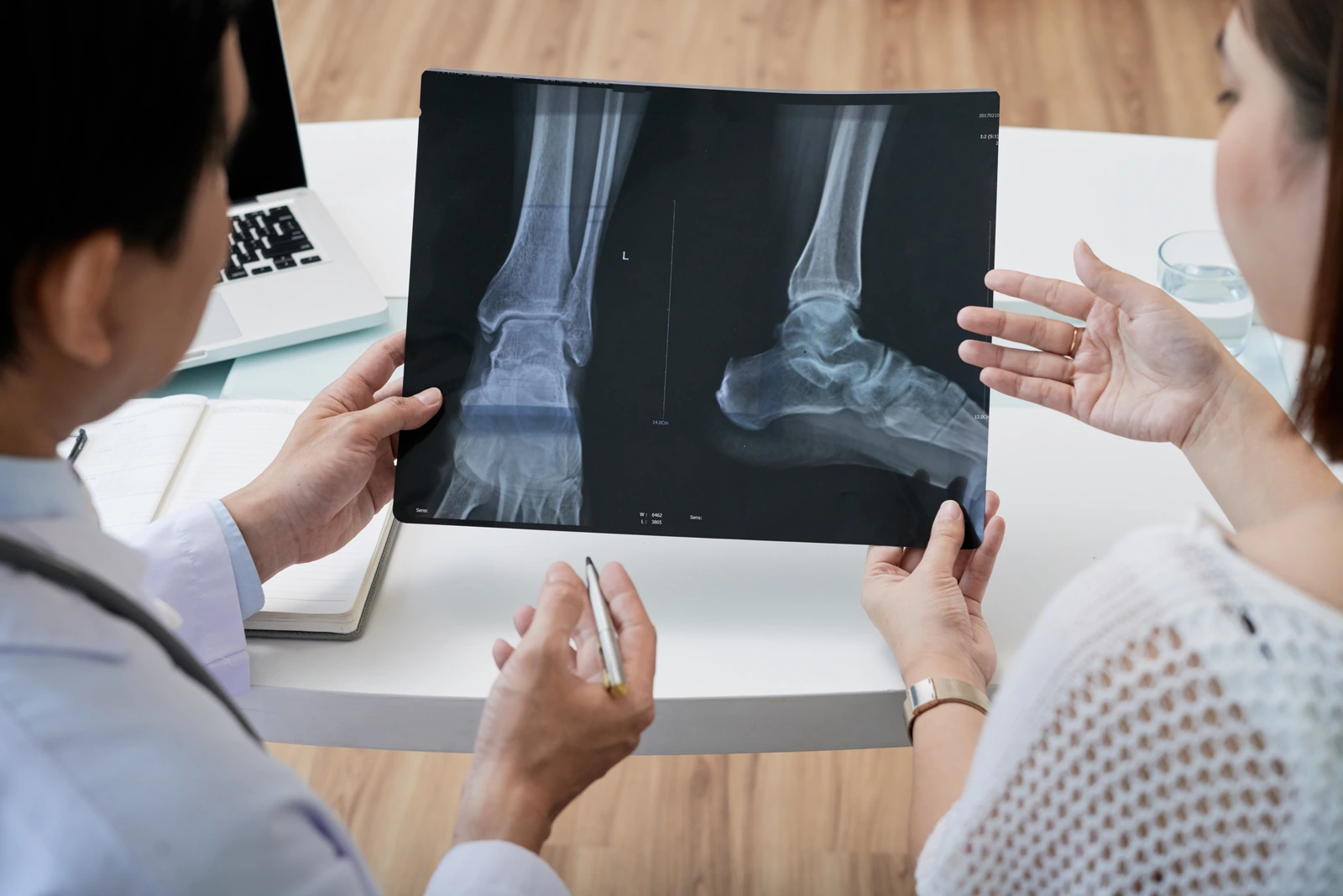
Diagnosis relies on standing, weight-bearing X-rays of the full leg, which let a surgeon precisely measure the mechanical axis — an imaginary line from the hip to the ankle — and determine exactly how much correction is needed and where the deformity is centered.
For a growing child with confirmed pathological bowing, guided growth surgery is often the preferred first step, using a small plate on the outer side of the growth plate to slow growth there while the inner side continues, gradually straightening the leg. For children who’ve finished growing, or adults, an osteotomy is used instead — surgically cutting and realigning the bone, then stabilizing it while it heals (this is sometimes called an acute deformity correction).
The key decision point for surgery isn’t cosmetic appearance alone. Surgeons pay close attention to whether the bowing is putting abnormal, concentrated stress on one part of the knee joint, since that pattern of wear is what tends to lead to earlier arthritis if left uncorrected.
This article is for general educational purposes only and does not constitute medical advice. Every patient’s anatomy, goals, and treatment plan are different. Please consult a qualified orthopedic surgeon to discuss whether any procedure described here is appropriate for you.