

06 Sep Magnetic Internal Lengthening Nails Explained: How the Technology Works
Magnetic internal lengthening nails are one of the technologies that transformed limb lengthening surgery over the past fifteen to twenty years, replacing much of what used to require external metal frames bolted through the skin into bone. Understanding how they work helps explain why the recovery experience looks the way it does.
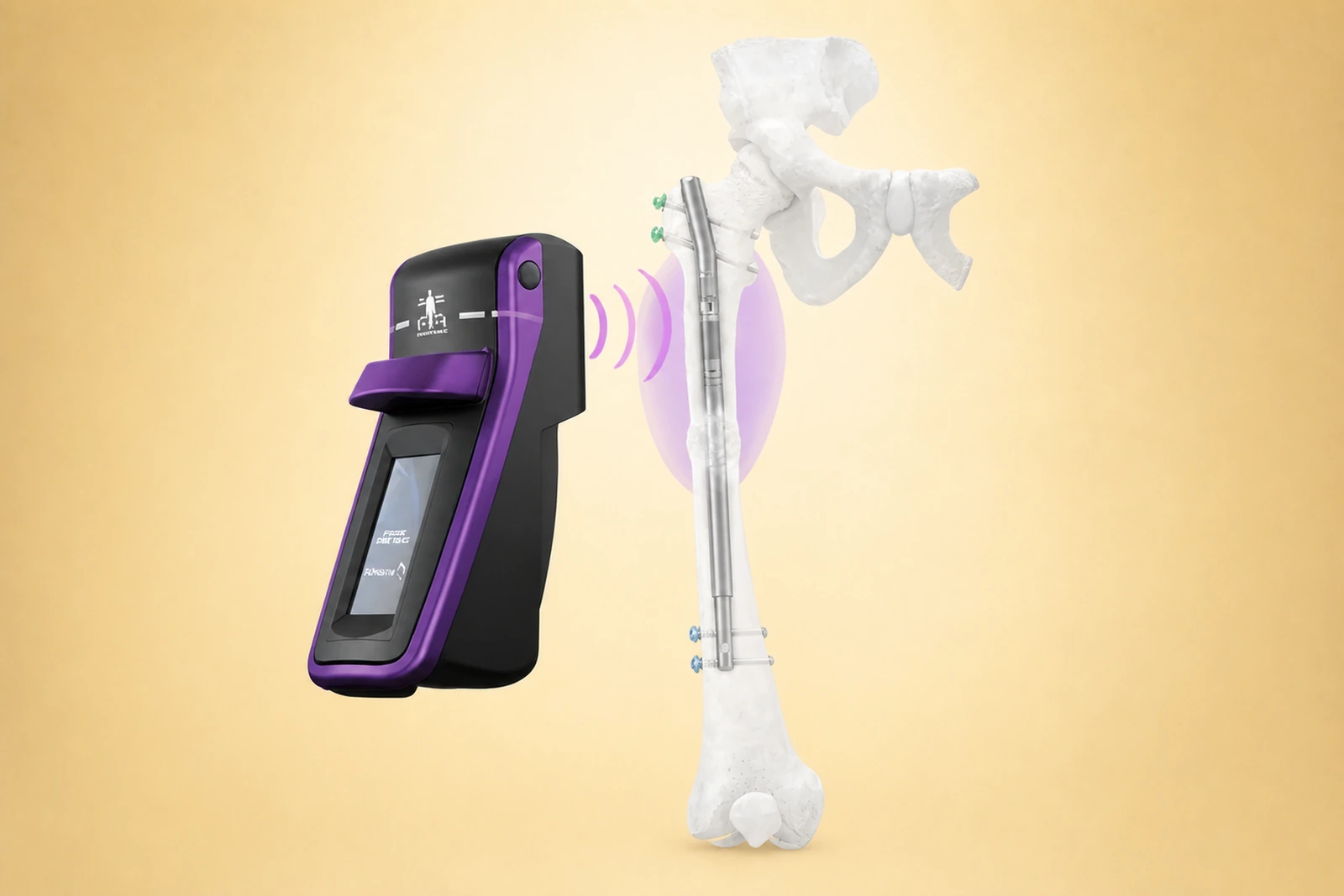
The nail itself is inserted inside the marrow canal of the bone during surgery, spanning the site where the bone has been surgically cut. Inside the nail is a small magnet connected to a precision gear mechanism. After surgery, once the initial healing (or "latency") period has passed — typically about a week to ten days — the lengthening phase begins. An external remote control unit, held against the skin over the nail, generates a rotating magnetic field, alternating from north to south and back. This spins the magnet inside the nail, which drives the internal gear mechanism to extend the nail by a tiny, precise amount.
Patients typically perform this activation themselves, several short sessions a day, following a schedule set by their surgical team — commonly totaling around 0.75 to 1 millimeter of lengthening per day, though the exact rate is customized to the individual. This slow, steady pace is what allows bone, nerves, blood vessels, muscles, and skin to stretch and regenerate safely alongside the lengthening, rather than being pulled apart faster than the body can adapt.
Throughout the lengthening phase, X-rays are taken every two weeks to monitor how the new bone is forming in the gap (called the regenerate) and to confirm the rate is on track. Once the target length is reached, the device stays in place during the consolidation phase, acting as an internal support while the new bone hardens and matures enough to bear full weight.
Because the mechanism is fully internal, patients avoid the external pins, wires, and visible frame associated with older lengthening methods, which generally means a lower risk of pin-site infections and a more comfortable day-to-day experience during treatment.
Weight-bearing (how much weight a patient can put on the leg) is determined by the device used (Precice vs. PMax), the patient’s body weight, and the quality of their regenerate bone.
This article is for general educational purposes only and does not constitute medical advice. Every patient’s anatomy, goals, and treatment plan are different. Please consult a qualified orthopedic surgeon to discuss whether any procedure described here is appropriate for you.